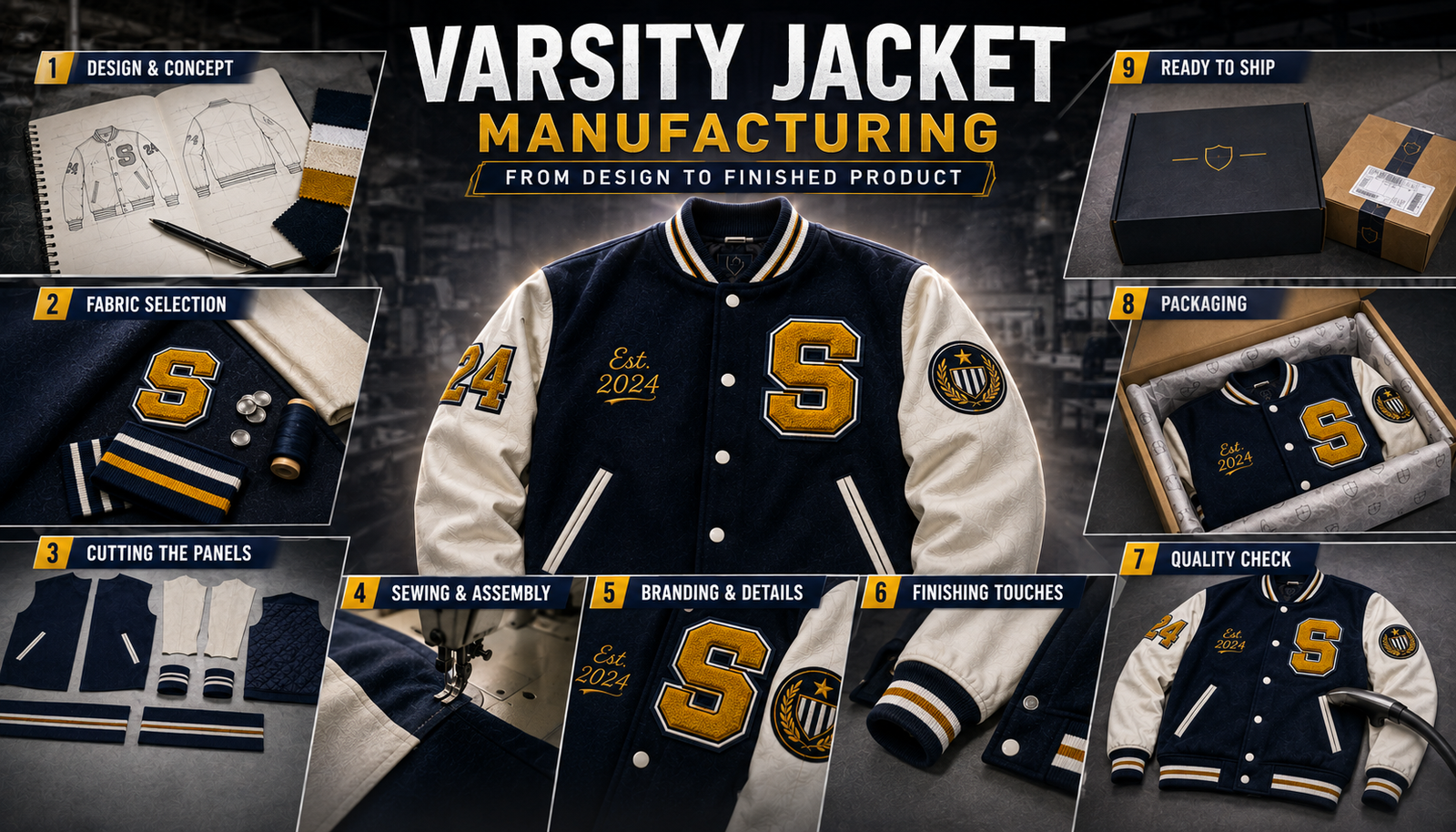
A high-quality varsity jacket does not start with a sewing machine. It starts with a design concept, material specification and carefully planned production process.
Unlike a basic sweatshirt or lightweight jacket, a varsity jacket can combine several different materials and manufacturing techniques in one garment. A traditional design may include a wool or wool-blend body, leather or PU leather sleeves, rib-knit trims, snap buttons, lining and decorative elements such as chenille patches and embroidery.
That complexity is why choosing the right varsity jacket manufacturer matters, particularly for clothing brands, sports teams, schools, retailers and private-label businesses ordering jackets in bulk.
From the first artwork and tech pack to fabric sourcing, pattern development, sample approval, decoration, stitching, quality inspection and final packaging, every stage can influence the finished jacket.
This guide explains the complete custom varsity jacket manufacturing process and what buyers should understand before moving into production.
1. The Manufacturing Process Starts With the Design
The first stage of custom varsity jacket manufacturing is turning an idea into a production-ready specification.
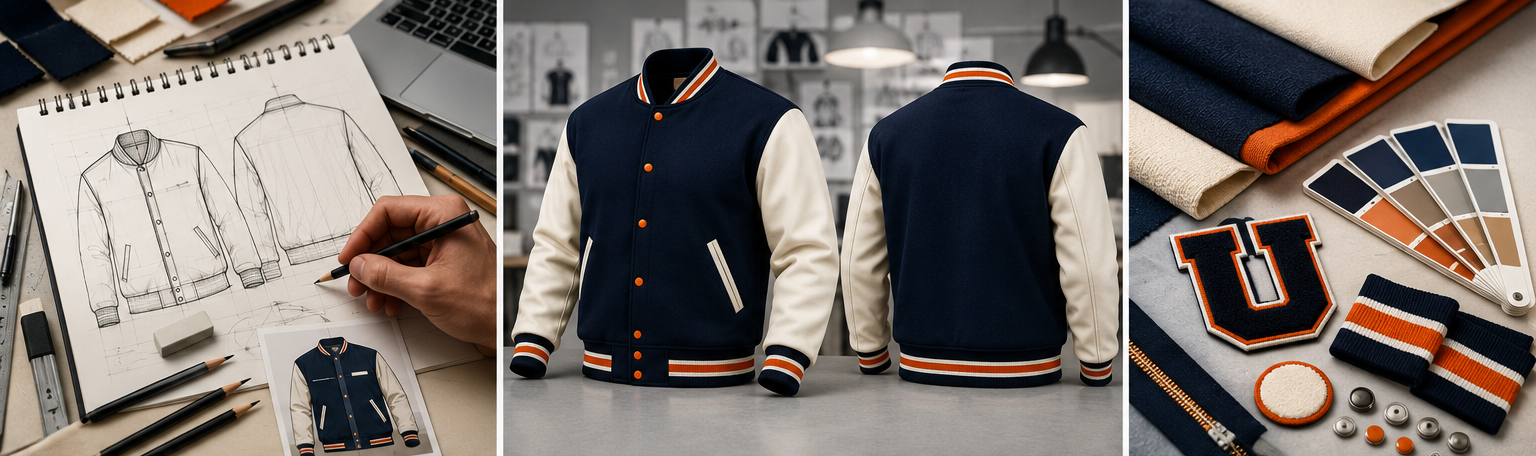
A manufacturer normally needs information such as:
- Jacket style and silhouette
- Front and back artwork
- Body and sleeve colors
- Fabric preferences
- Size range
- Logo placement
- Patch artwork
- Embroidery requirements
- Pocket style
- Closure type
- Rib specifications
- Labels and packaging
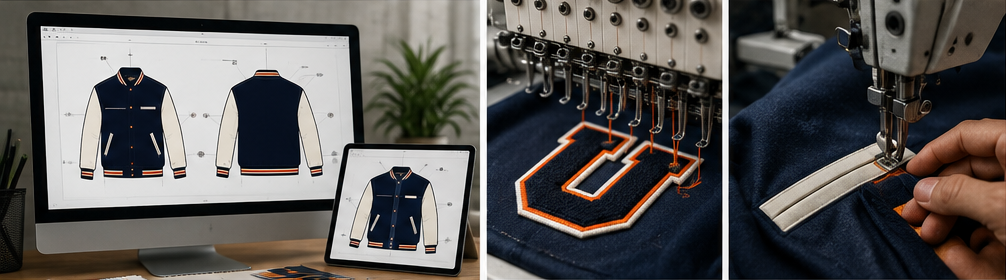
A simple reference image can communicate the overall look, but a professional varsity jacket manufacturer needs more information to reproduce the garment consistently.
For established brands, a tech pack can provide measurements, construction details, artwork files, fabric references and labeling requirements.
For newer brands without a complete tech pack, the manufacturer may develop the specification from sketches, reference garments, artwork and measurements.
2. Choosing the Right Varsity Jacket Materials
Material selection has a major impact on the appearance, weight, durability and cost of a jacket.
Wool and Wool Blends
A wool or wool-blend body gives the traditional varsity jacket its structured appearance and heavier seasonal feel.
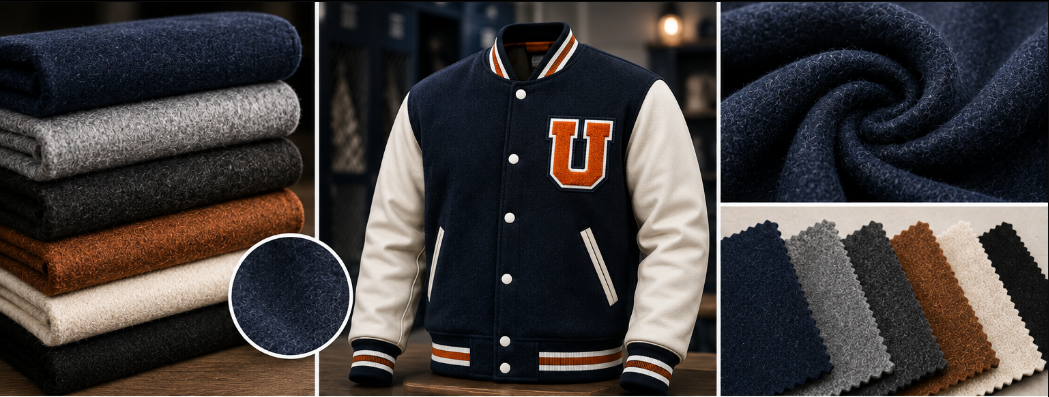
It is commonly considered for:
- College letterman jackets
- School jackets
- Premium team jackets
- Traditional varsity collections
- Fashion outerwear
Leather and PU Leather
Leather sleeves create the classic contrast associated with many premium letterman jackets.
Manufacturers can develop sleeves using genuine leather or synthetic alternatives such as PU leather, depending on the buyer's requirements and target price point.
Satin and Synthetic Fabrics
Satin, polyester and other lightweight materials can be used for alternative varsity constructions, particularly when the product is intended for fashion or streetwear collections.
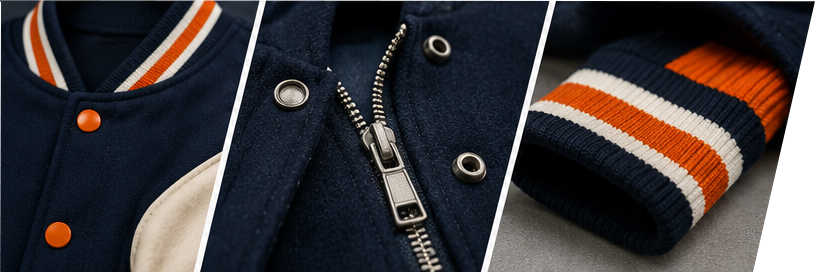
Rib Knit
The collar, cuffs and waistband are small components, but they have a major effect on the finished appearance.
Stripe colors, rib width, stretch and recovery should therefore be specified during development rather than treated as an afterthought.
3. Developing the Jacket Pattern
After the design and material direction are confirmed, the next stage is pattern development.
The pattern determines how the jacket's individual fabric pieces will fit together.
This includes components such as:
- Front panels
- Back panel
- Sleeves
- Collar
- Cuffs
- Waistband
- Pocket components
- Lining
- Placket or closure areas
The desired fit also needs to be established at this stage.
A classic varsity jacket may use a conventional silhouette, while a contemporary streetwear collection might require an oversized or relaxed shape.
The manufacturer can then create measurements and grading for the required size range.
This is one reason brands should not rely only on a generic jacket template when developing custom letterman jackets.
4. Creating the First Sample
Once the pattern and construction details are prepared, a physical sample can be developed.
The sample is one of the most important stages in varsity jacket production because it allows the buyer to evaluate the actual garment rather than judging everything from a digital mockup.
A sample can reveal issues with:
- Overall fit
- Jacket length
- Sleeve proportions
- Shoulder position
- Rib dimensions
- Pocket placement
- Snap-button position
- Fabric weight
- Lining
- Patch positioning
Current manufacturing practices commonly use a sample approval stage before bulk cutting and production, particularly for customized varsity jackets.
For brands, this stage is also the opportunity to make revisions before committing materials to a larger production run.
5. Chenille Patches and Embroidery
Decoration is one of the defining characteristics of a varsity jacket.
Chenille Patches
Chenille is especially associated with traditional letterman jackets because of its raised, textured appearance.
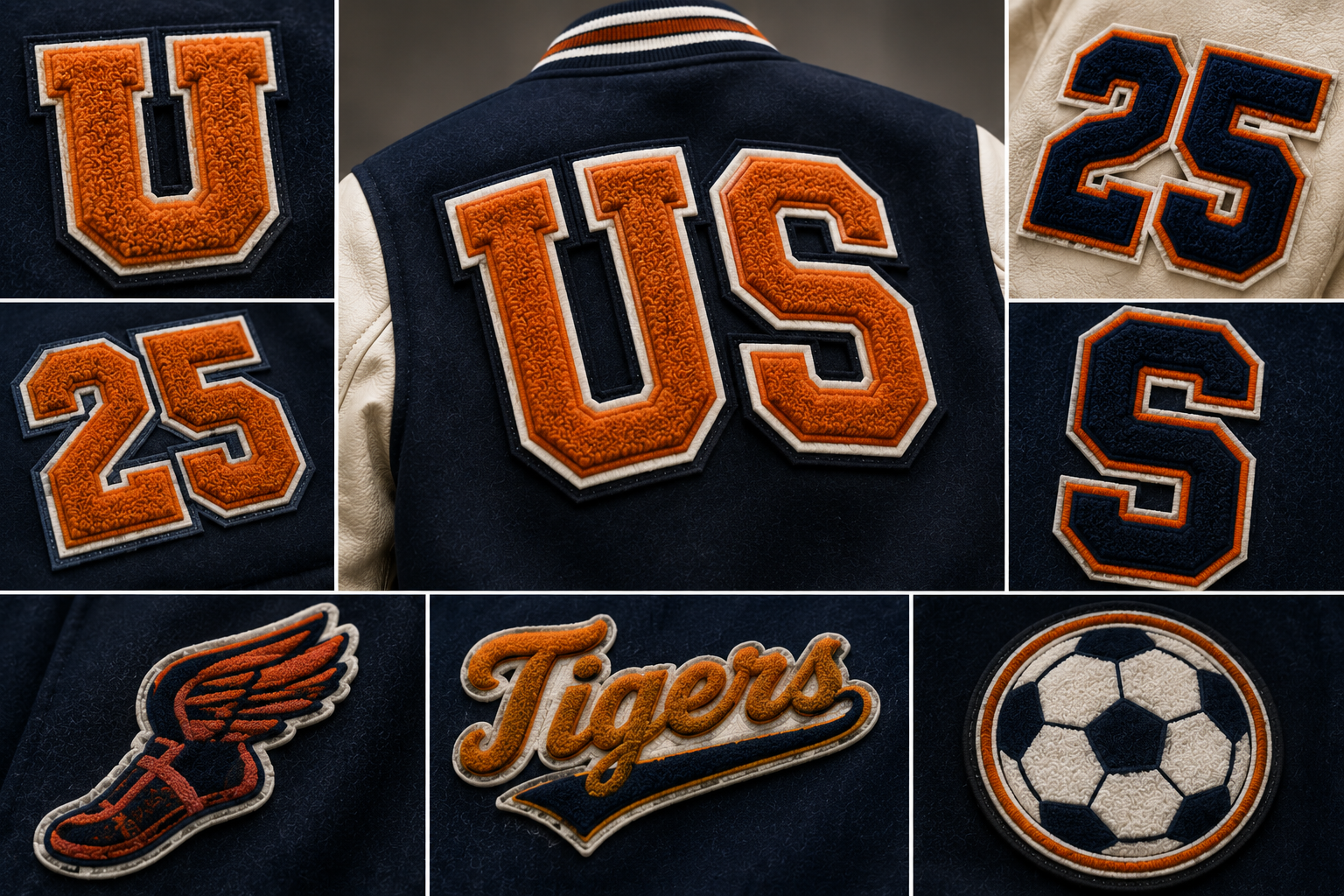
It can be used for:
- Large back letters
- School initials
- Team names
- Numbers
- Graduation years
- Athletic achievements
- Club logos
The artwork is converted into a production-ready patch specification before application.
Embroidery
Embroidery provides another way to add branding and artwork.
It can be used for:
- Chest logos
- Sleeve graphics
- Names
- Numbers
- Small badges
- Brand marks
Some manufacturers also combine chenille, embroidery, appliqué and other decoration methods to create more layered jacket designs.
The important point is that decoration should be planned before cutting and assembly, because patch and embroidery placement can influence panel construction.
6. Cutting the Jacket Panels
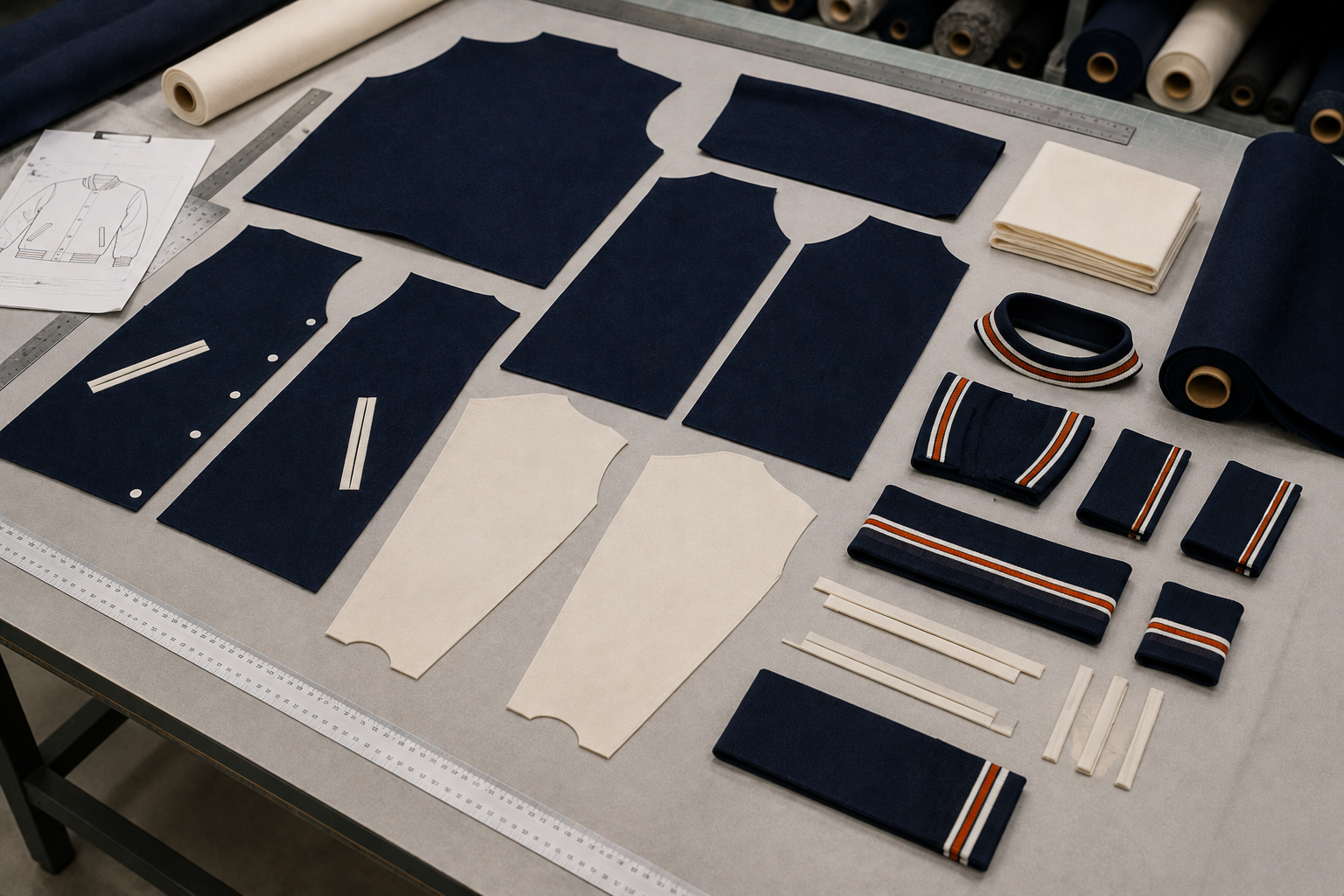
After the sample and specifications are approved, production moves into fabric cutting.
The selected materials are prepared according to the approved patterns.
For a multi-material custom varsity jacket, this can involve separate cutting processes for the body, sleeves, lining, rib components and pocket sections.
Accurate cutting is important because even small inconsistencies can affect:
- Panel alignment
- Sleeve symmetry
- Overall measurements
- Pattern matching
- Decoration placement
For bulk orders, maintaining consistent cutting standards across the production run is essential.
7. Panel Assembly and Sewing
The cut components are then assembled according to the approved construction.
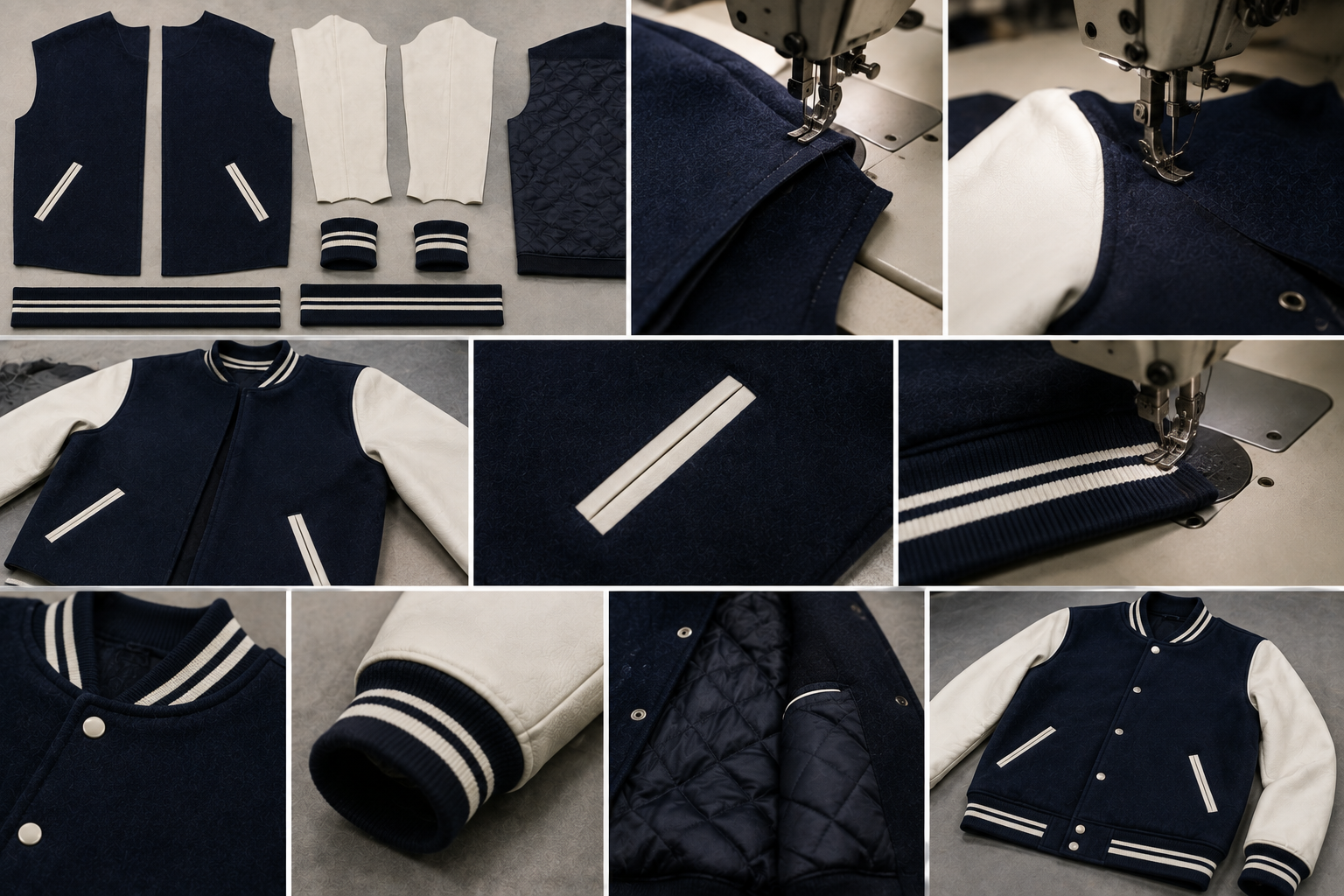
Depending on the design, production can involve:
- Preparing individual panels
- Joining body sections
- Attaching sleeves
- Constructing pockets
- Installing lining
- Adding rib-knit components
- Installing snaps or other closures
- Completing finishing operations
A varsity jacket requires more coordination than many basic apparel products because different materials have to meet cleanly at multiple construction points.
This is particularly important when combining wool varsity jacket bodies with leather sleeves, where differences in material behavior need to be considered during sewing and finishing.
8. Adding the Final Branding Details
After the main construction is complete, the jacket receives its final branding components.
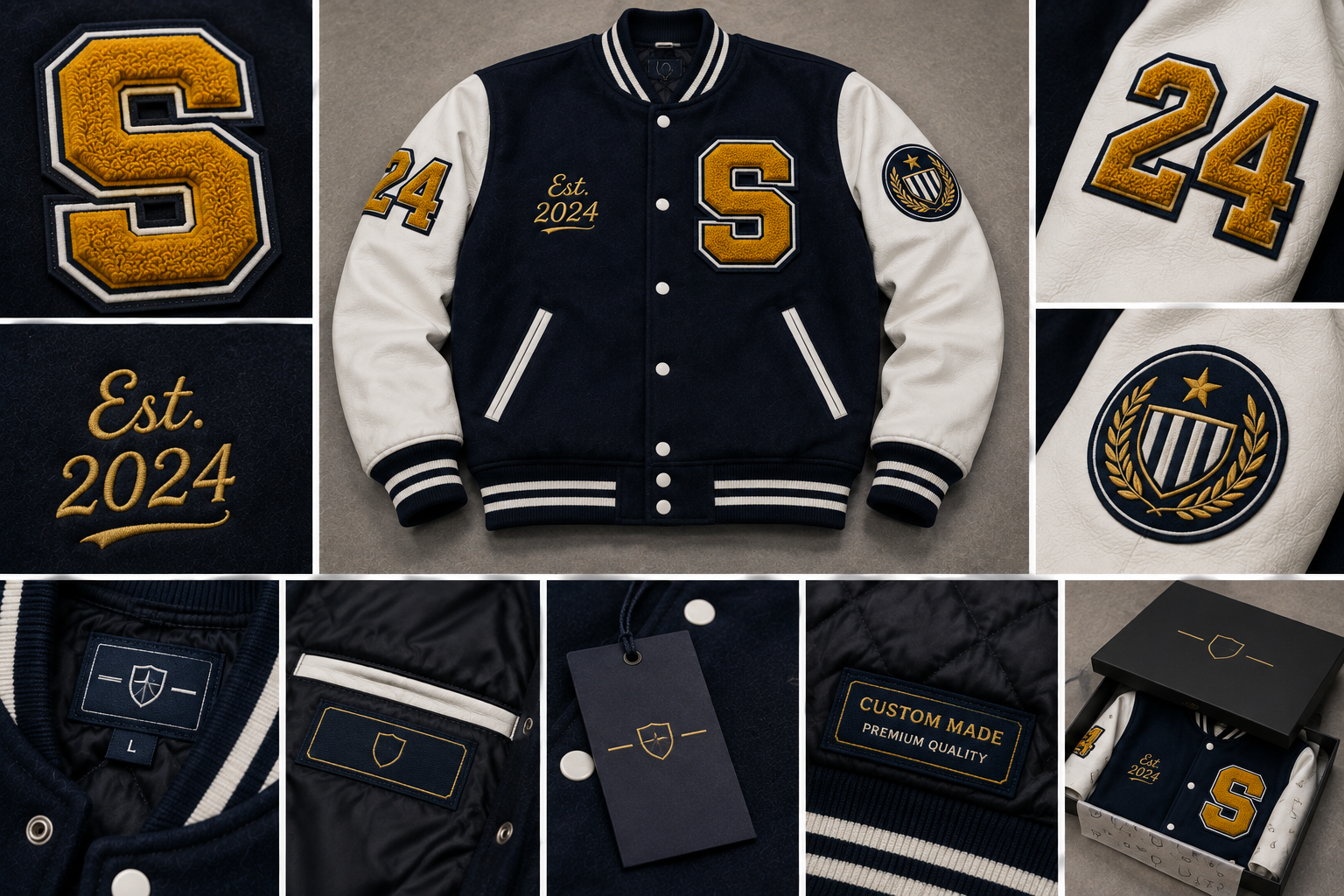
For a clothing brand, this may include:
- Woven neck labels
- Size labels
- Care labels
- Brand patches
- Hang tags
- Custom buttons
- Branded packaging
This is where private-label varsity jacket manufacturing becomes particularly valuable.
Instead of receiving a generic jacket, a private-label buyer can develop the garment around its own brand identity, including labeling and packaging specifications. Current private-label manufacturing services commonly offer custom labels, packaging and branded garment details alongside the jacket itself.
9. Quality Control Before Bulk Shipment
Quality control should not be limited to looking at the finished jacket.
A professional varsity jacket manufacturer should be able to check important production points throughout the manufacturing process.
Typical inspection areas can include:
Measurements
The finished jacket is checked against the approved size chart.
Stitching
Seams, hems and attachment points are inspected for consistency.
Decoration
Chenille patches, embroidery and other artwork are checked for positioning and finishing.
Materials
The production team verifies that the approved fabric and material specifications are being followed.
Hardware
Buttons, snaps, zippers and other components are checked for proper attachment.
Appearance
The finished jacket is reviewed for visible defects, stains, loose threads, uneven panels or other finishing issues.
Quality-control procedures and final garment inspection are commonly included in current OEM varsity-jacket manufacturing workflows.
10. Packing and Preparing the Finished Jackets
Once the jackets pass inspection, they move to the packing stage.
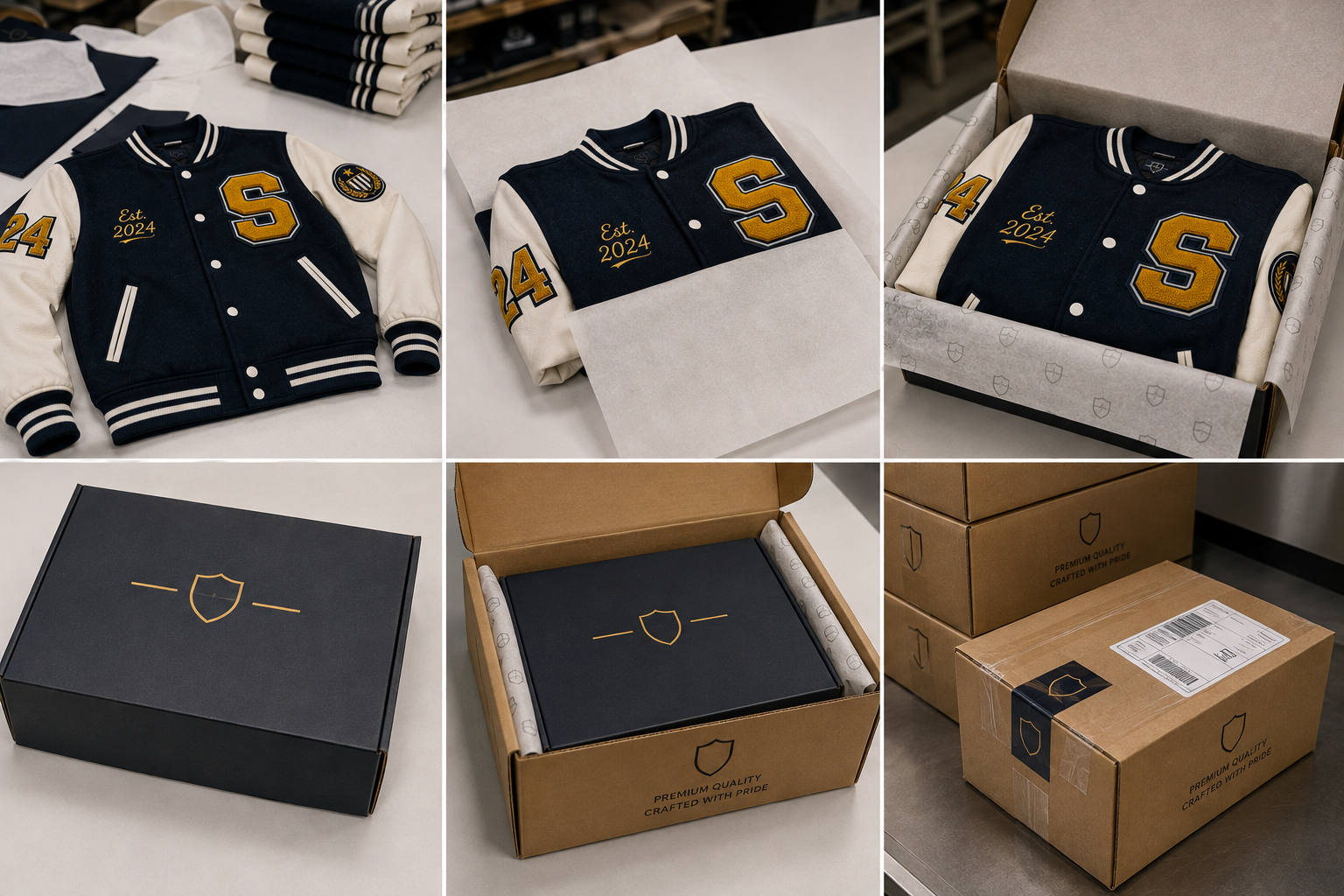
Packaging requirements depend on the buyer.
A wholesale order may require straightforward protective packaging, while a private-label clothing brand may require:
- Individual polybags
- Custom hang tags
- Branded packaging
- Size stickers
- Cartons
- Retail-ready presentation
Packaging should be agreed during the production planning stage so the manufacturer can prepare the correct materials before the finished jackets are ready.
11. What Affects the Cost of Manufacturing Varsity Jackets?
There is no single manufacturing price for every varsity jacket.
The final cost can change significantly depending on the construction and specifications.
Important factors include:
Fabric: Wool, wool blends, leather, PU leather, satin and other materials have different costs.
Construction: More complex jacket designs require additional production work.
Decoration: Chenille, embroidery, appliqué and other branding techniques affect production costs.
Quantity: Bulk production can change the per-unit manufacturing cost.
Size range: Extended sizing and custom grading may require additional development.
Hardware: Custom snaps, zippers and other components can affect the specification.
Labels and packaging: Private-label requirements add additional production components.
Sampling: Custom development normally requires sample work before bulk manufacturing.
For this reason, brands requesting a custom varsity jacket manufacturer quote should provide as much information as possible instead of asking for a price based only on one reference image.
12. How Long Does Varsity Jacket Manufacturing Take?
Production time depends on the jacket's construction, order quantity, decoration, material availability and approval process.
The process normally involves two separate periods:
Development: Design confirmation, material selection, pattern development and sample approval.
Bulk production: Cutting, decoration, assembly, finishing, inspection and packing.
Current manufacturer examples show that sample and bulk timelines can vary considerably depending on customization and order requirements, so buyers should confirm a production schedule with their factory rather than relying on a universal turnaround time.
Brands planning seasonal collections should therefore begin development well before their intended launch date.
How to Choose the Right Varsity Jacket Manufacturer
The cheapest quote is not necessarily the best manufacturing option.
Before selecting a custom varsity jacket supplier, brands should evaluate:
Manufacturing Experience
Does the factory regularly produce varsity and letterman jackets?
Material Options
Can the manufacturer work with the fabrics and sleeve materials required for the design?
Decoration Capability
Can they handle chenille patches, embroidery, appliqué and other branding requirements?
Sampling
Can you approve a physical sample before bulk manufacturing?
Quality Control
Does the manufacturer have a defined inspection process?
Private Label
Can they produce your labels, hang tags and packaging?
Production Capacity
Can they maintain consistent quality when moving from samples to larger orders?
Communication
Can the production team understand technical specifications, artwork and revisions accurately?
These factors are particularly important when sourcing wholesale varsity jackets for a brand or retailer because consistency matters across the complete production batch.
From Concept to Finished Varsity Jacket
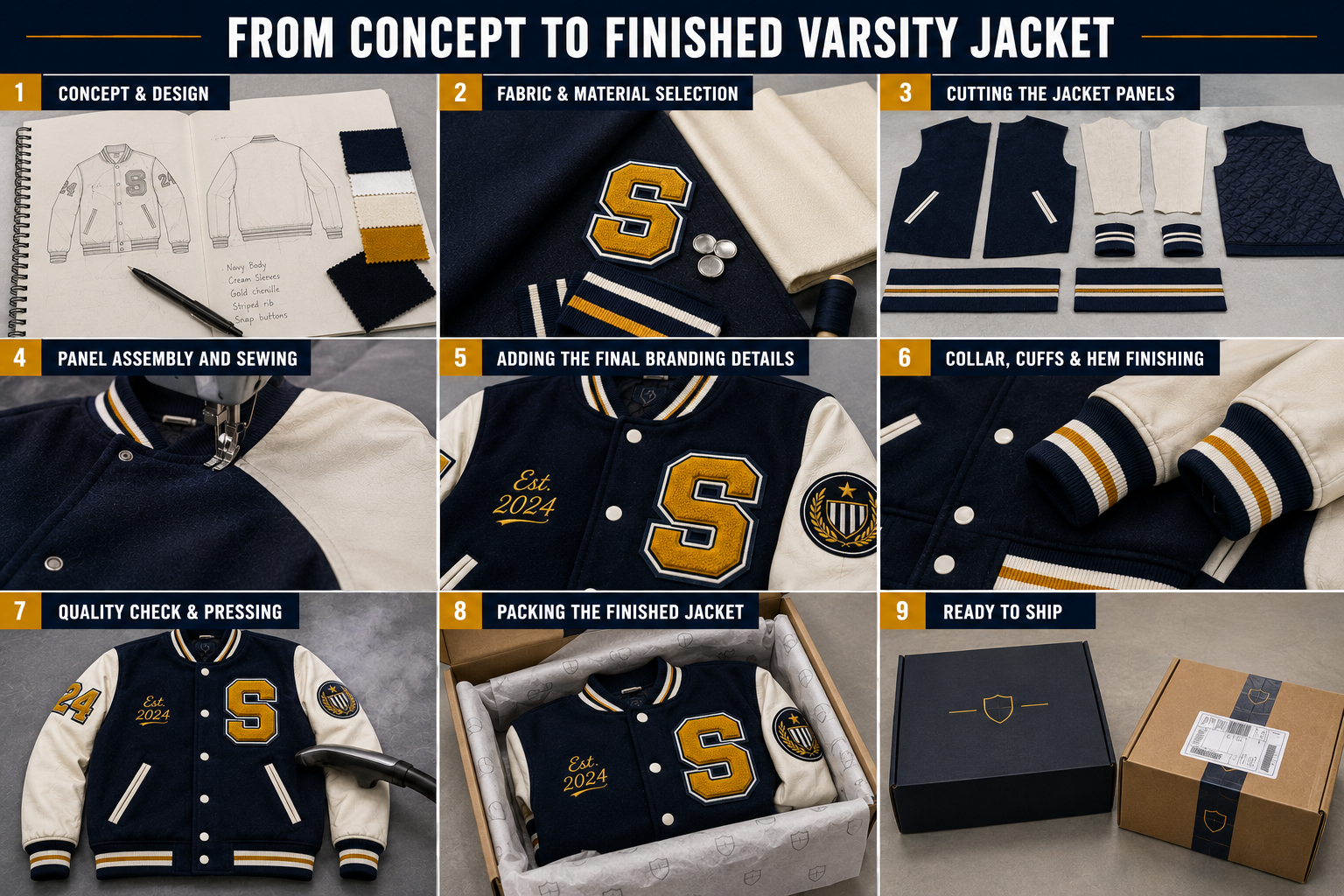
The journey from a jacket sketch to a finished garment involves considerably more than cutting fabric and sewing panels together.
A successful varsity jacket manufacturing process connects design development, material selection, pattern making, sampling, decoration, cutting, sewing, finishing, quality control and packaging into one coordinated workflow.
For brands, schools, sports organizations and retailers, the most important step is creating a clear production specification before bulk manufacturing begins.
When the materials, measurements, artwork, decoration, labels and construction details are properly defined, the manufacturer has a much clearer path from the original concept to the final custom varsity jacket.
That is ultimately what separates a generic jacket from a properly developed custom letterman jacket manufactured to a brand or team's specifications.
Frequently Asked Questions
How are varsity jackets manufactured?
Varsity jackets are typically developed through design specification, material selection, pattern development, sampling, cutting, decoration, panel assembly, finishing, quality inspection and packaging.
What materials are used to make varsity jackets?
Common materials include wool, wool blends, leather, PU leather, satin, polyester and other fabrics. The combination depends on the jacket design and intended market.
Can I manufacture my own custom varsity jacket design?
Yes. Brands and teams can develop custom jackets around their own artwork, colors, measurements, patches, embroidery, materials, labels and packaging requirements.
What is the difference between a varsity jacket and a letterman jacket?
The terms are often used interchangeably. Both generally refer to the recognizable collegiate or athletic jacket style, although specific construction and decoration can vary by design.
Can varsity jackets be manufactured for private-label brands?
Yes. Private-label production can include custom garment labels, branding, hang tags and packaging in addition to the jacket's fabric and design specifications.
Can a manufacturer produce varsity jackets in bulk?
Yes. Bulk manufacturing is commonly available for brands, schools, sports teams, retailers, distributors and other organizations. Production requirements and minimum quantities vary by manufacturer and project.
