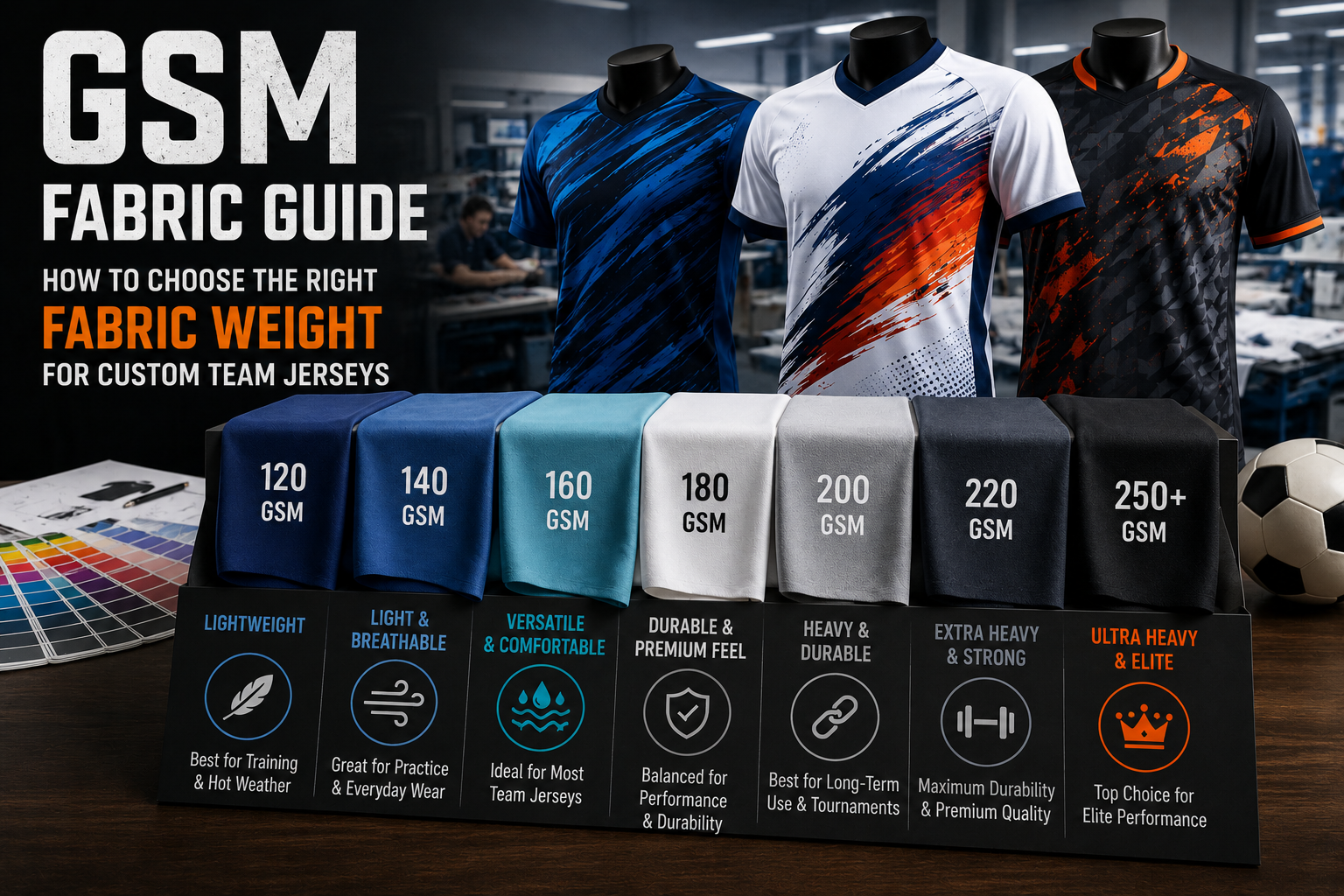
Understanding GSM is the difference between a jersey that performs and one that just looks good on paper.
Introduction
When most people order custom jerseys, they focus on color, logo placement, and design — and rarely ask about fabric weight. But GSM (Grams per Square Meter) is one of the most important specs in sportswear manufacturing, directly affecting how a jersey feels, breathes, moves, and holds up over a full season.
Choosing the wrong GSM can mean a jersey that's too heavy and hot for summer matches, or too thin and see-through for a cold-weather sport. This guide breaks down exactly what GSM means, how to choose the right weight for your sport and climate, and why it matters more than most buyers realize.
What Is GSM in Fabric?
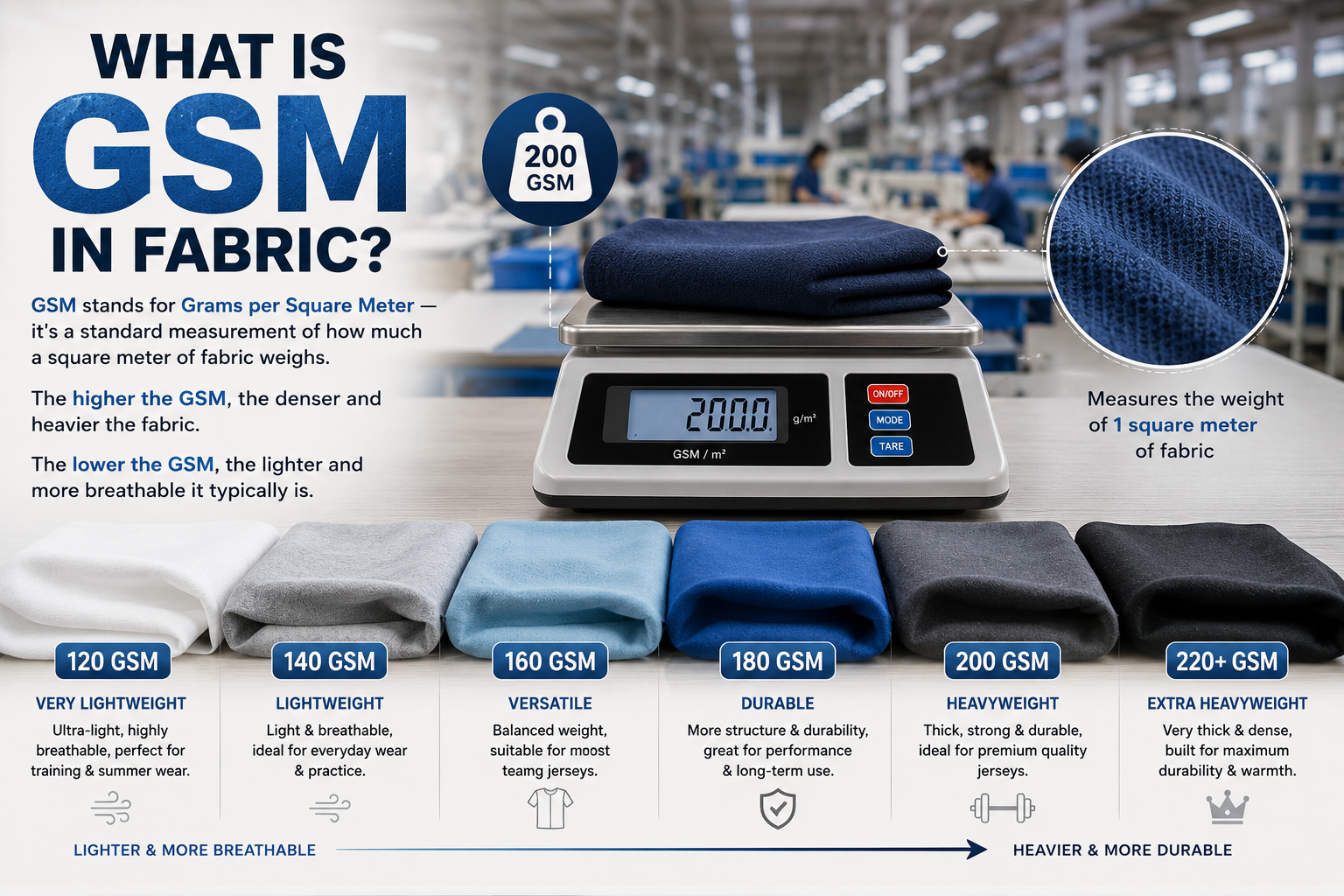
GSM stands for Grams per Square Meter — it's a standard measurement of how much a square meter of fabric weighs. The higher the GSM, the denser and heavier the fabric. The lower the GSM, the lighter and more breathable it typically is.
Think of it as the fabric equivalent of paper thickness — a higher number doesn't automatically mean "better," it means different performance characteristics suited to different use cases.
GSM Ranges Commonly Used in Sportswear
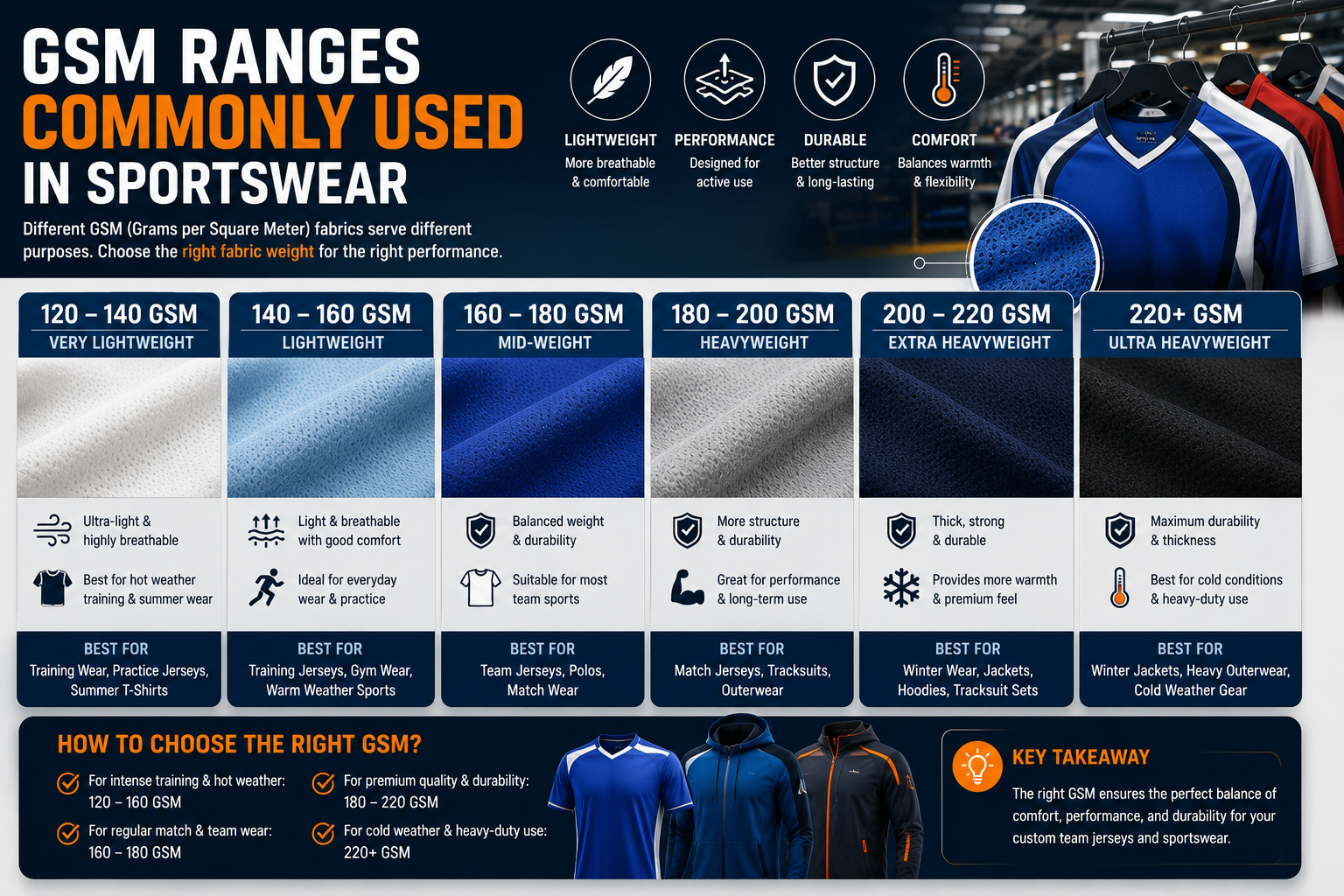
| GSM Range | Fabric Feel | Common Use Cases |
|---|---|---|
| 120–140 GSM | Ultra-lightweight, highly breathable | Running jerseys, hot-climate soccer kits, summer training wear |
| 140–160 GSM | Lightweight, breathable with slightly more structure | Standard soccer/football jerseys, basketball jerseys |
| 160–180 GSM | Medium weight, more durable | Rugby jerseys, cricket kits, all-season team wear |
| 180–220 GSM | Heavier, more substantial feel | Cold-weather sportswear, training hoodies, thicker polos |
| 220+ GSM | Heavy-duty, thick fabric | Winter team jackets, premium fan merchandise, sweatshirts |
These ranges vary slightly between manufacturers and fabric blends, but they give a solid reference point when discussing fabric options.
How to Choose the Right GSM for Your Team
1. Consider the Sport
Different sports put different demands on fabric:
- Soccer, running, basketball — favor lighter GSM (120–160) for maximum breathability and freedom of movement during high-intensity play
- Rugby, American football, cricket — often use slightly heavier GSM (160–200) for added durability under physical contact and repeated washing
- Winter sports or outdoor training gear — benefit from higher GSM (200+) for warmth and wind resistance
2. Consider the Climate
A jersey designed for a hot, humid climate needs to prioritize breathability — meaning lower GSM with strong moisture-wicking properties. Teams playing in cooler climates can afford a slightly heavier fabric without compromising comfort.
3. Consider Durability Needs
Youth and recreational teams often replace jerseys more frequently, so lighter GSM is usually fine. Competitive or professional-level teams playing multiple matches per week need fabric that holds up to frequent washing and physical contact — favoring the mid-to-higher GSM range.
4. Consider the Print Method
Fabric weight also interacts with your chosen customization method:
- Sublimation printing works best on lighter, tightly-woven polyester fabrics, typically in the 140–180 GSM range
- Embroidery requires slightly heavier fabric (160 GSM+) to support stitching without puckering or damaging the material
Common Mistakes Teams Make With Fabric Weight
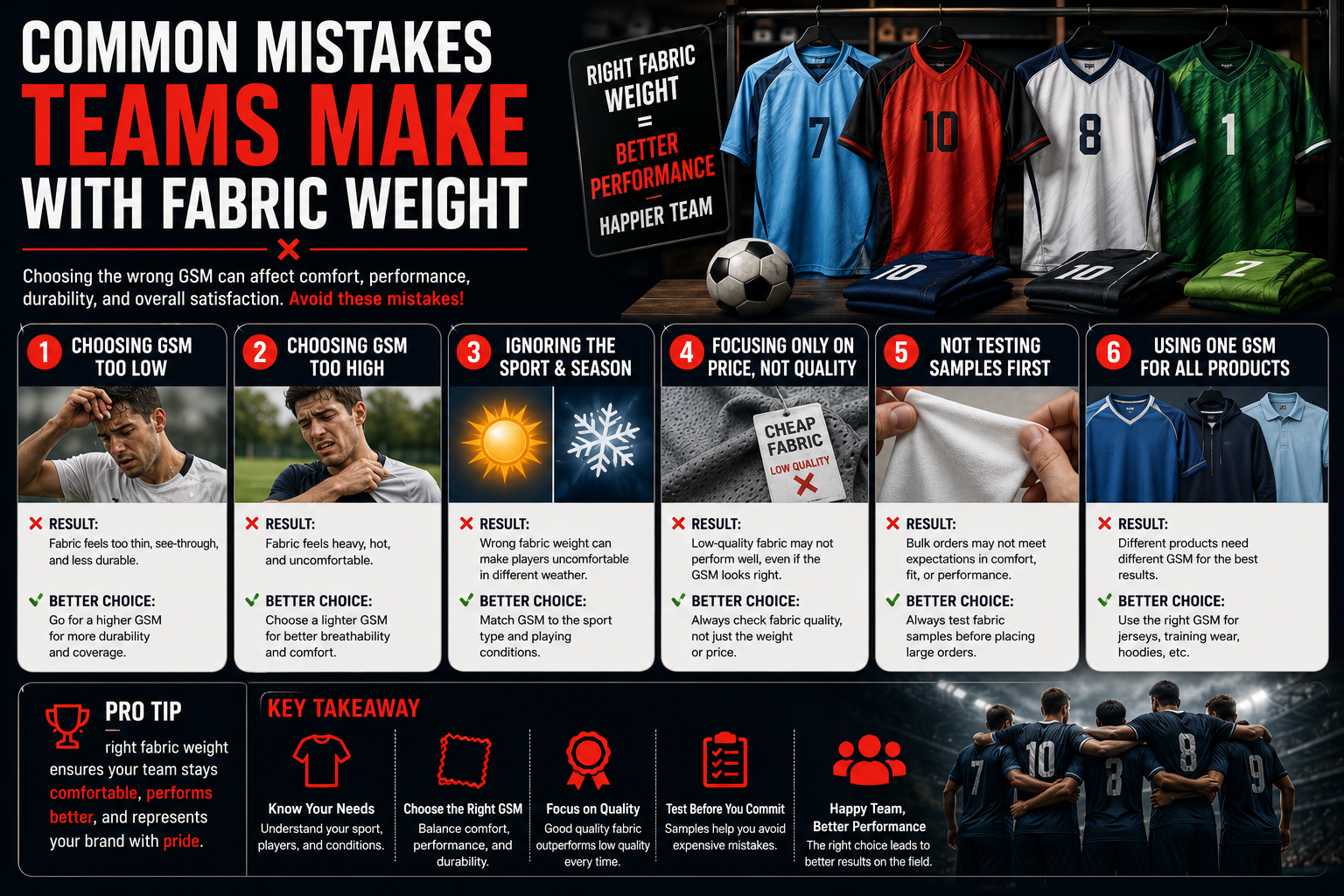
Choosing GSM based on "premium feel" alone. A heavier fabric can feel more substantial in hand, but that doesn't mean it performs better on the field. Many teams choose higher GSM assuming it means better quality, when in reality it may reduce breathability during actual play.
Ignoring climate and season. A jersey designed for European winter leagues won't perform the same way in a hot, humid climate — and vice versa. Fabric weight should match where and when the team actually plays.
Not asking the manufacturer for fabric samples. GSM numbers alone don't tell the whole story — the weave, blend (polyester vs poly-spandex), and finish also affect how a fabric performs. Requesting a physical sample before bulk ordering avoids costly mistakes.
GSM and Fabric Blend: Why Both Matter Together
GSM tells you the weight, but the fabric blend tells you the performance characteristics. Common blends in sportswear include:
- 100% Polyester — most common for jerseys, excellent for sublimation, good moisture-wicking
- Polyester-Spandex Blend — adds stretch, ideal for compression wear and form-fitting jerseys
- Polyester Mesh Panels — often combined with a solid weave for extra ventilation in high-sweat areas (underarms, back)
A knowledgeable manufacturer will help you match GSM and blend together, rather than looking at fabric weight in isolation.
Frequently Asked Questions
What GSM is best for soccer jerseys? Most competitive soccer jerseys fall between 140–160 GSM, balancing breathability with enough durability for regular match play.
Is higher GSM always more durable? Not necessarily. Durability depends on the weave quality and fabric blend, not just weight. A well-woven 160 GSM fabric can outlast a poorly constructed 200 GSM fabric.
Can I request a specific GSM for my custom order? Yes — most manufacturers offer a range of GSM options and can guide you based on your sport, climate, and printing method.
Does GSM affect the cost of custom jerseys? Generally, heavier GSM fabric costs slightly more due to increased material usage, though the difference is usually marginal compared to design and printing costs.
Final Thoughts
GSM might not be the first thing that comes to mind when designing a custom team jersey, but it's one of the specs that most directly affects how the final product actually performs on the field. Matching the right fabric weight to your sport, climate, and printing method ensures your team gets a jersey that not only looks sharp but holds up match after match.
Not sure which fabric weight is right for your team? [Get in touch] and we'll help you choose the right GSM and blend for your sport, climate, and design — whether it's a bulk team order or a single custom jersey.
