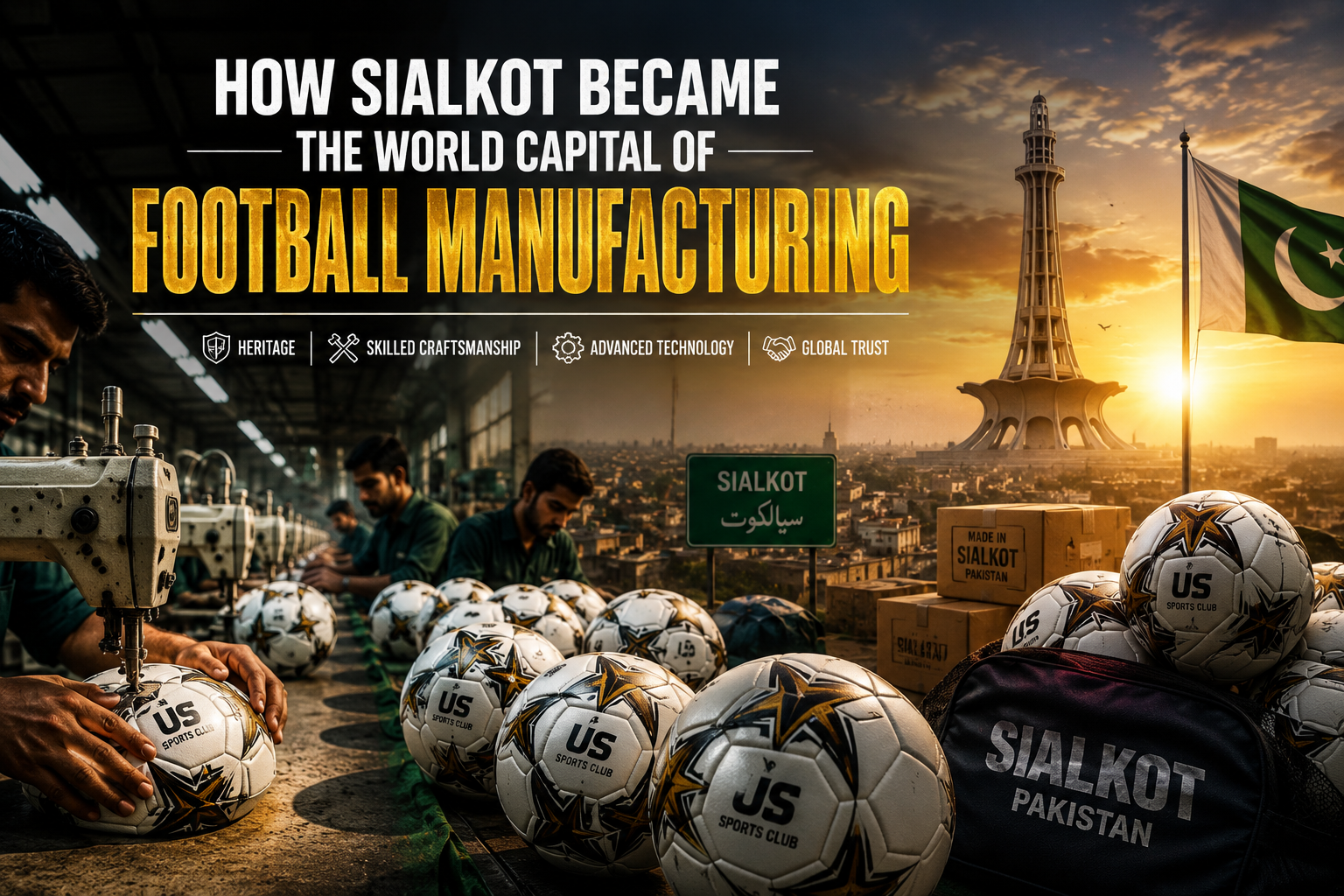
Over 70% of the world's hand-stitched footballs come from one city in Pakistan. This is the story of how Sialkot, a city of craftsmen, became the most important sports goods manufacturing hub on earth.
Every time you watch a professional football match, there's a strong chance the ball was made in a city you may never have heard of: Sialkot, Pakistan.
Sialkot produces over 70% of the world's hand-stitched footballs. Every major brand — Adidas, Nike, Puma, Select, Mitre — sources from Sialkot. The city's 450+ sports goods manufacturers export over $500 million worth of sports goods annually. This didn't happen by accident.
The Origins: British India and the Art of Leather
Sialkot's story begins in the late 19th century under British colonial rule. The city was already known for surgical instrument manufacturing — precision metalwork that required skilled artisans and exacting quality standards.
In the 1880s, a British soldier brought a damaged football to a local cobbler in Sialkot. The cobbler repaired it. Word spread. British officers began commissioning Sialkot craftsmen to make new footballs from locally available leather. By the early 1900s, dozens of workshops were producing footballs for the British military stationed across India.
When British India was partitioned in 1947, Sialkot became part of Pakistan — and its craftsmen kept their skills. The sports goods industry continued to grow, pivoting from military supply to global export.
The FIFA Seal: How Quality Standards Transformed the Industry
In the 1970s and 1980s, criticism of labour practices in sports goods manufacturing — including child labour in football stitching — brought international scrutiny to Sialkot. The industry's response was transformative.
In 1997, the Sialkot Soccer Ball Project (also known as the Atlanta Agreement) introduced the first major ethical monitoring programme in any global supply chain. Independent monitors verified that children were not working in football stitching. BSCI, ISO and FIFA audit frameworks followed.
The result: Sialkot became one of the most rigorously monitored manufacturing regions in the world. Brands that had questioned sourcing from Pakistan doubled down — because Sialkot now offered both quality AND compliance that few other regions could match.
The Sialkot Supply Chain: How a Football Is Made
What makes Sialkot exceptional is not just its craftsmen — it's the entire ecosystem:
- Raw materials: Premium PU and PVC synthetic leather manufactured locally or imported from Korea and Japan through established supply networks.
- Panel cutting: Precision die-cutting operations producing consistent hexagonal and pentagonal panels.
- Printing: Screen printing and sublimation printing workshops handling branding for hundreds of global clients simultaneously.
- Stitching centres: Home-based and workshop stitchers trained across generations. A skilled Sialkoti stitcher can produce 3–5 match-quality balls per day.
- Quality control: BSCI-audited testing facilities measuring circumference, weight, pressure retention, water absorption and rebound.
- Export infrastructure: Karachi and Lahore ports with established freight forwarding for DHL, sea freight FCL/LCL and air cargo.
World Cup Balls: The Sialkot Legacy
Every FIFA World Cup since 1986 has featured a match ball manufactured in Sialkot:
- Adidas Azteca (1986) — Mexico
- Adidas Etrusco Unico (1990) — Italy
- Adidas Questra (1994) — USA
- Adidas Fevernova (2002) — Korea/Japan
- Adidas Teamgeist (2006) — Germany
- Adidas Jabulani (2010) — South Africa
- Adidas Brazuca (2014) — Brazil
- Adidas Telstar 18 (2018) — Russia
- Adidas Al Rihla (2022) — Qatar
- FIFA World Cup 2026 — USA/Canada/Mexico
Sourcing From Sialkot Today
The difference between buying a branded football at retail and buying from Sialkot factory-direct is significant. You're buying from the same production ecosystem — without the brand markup.
US Sports CLUB is a BSCI-audited manufacturer in Sialkot. We supply custom footballs, sportswear, cricket kits, boxing equipment and leather goods factory-direct to buyers in 50+ countries. Learn more about our Sialkot manufacturing operation or request a factory-direct quote.
