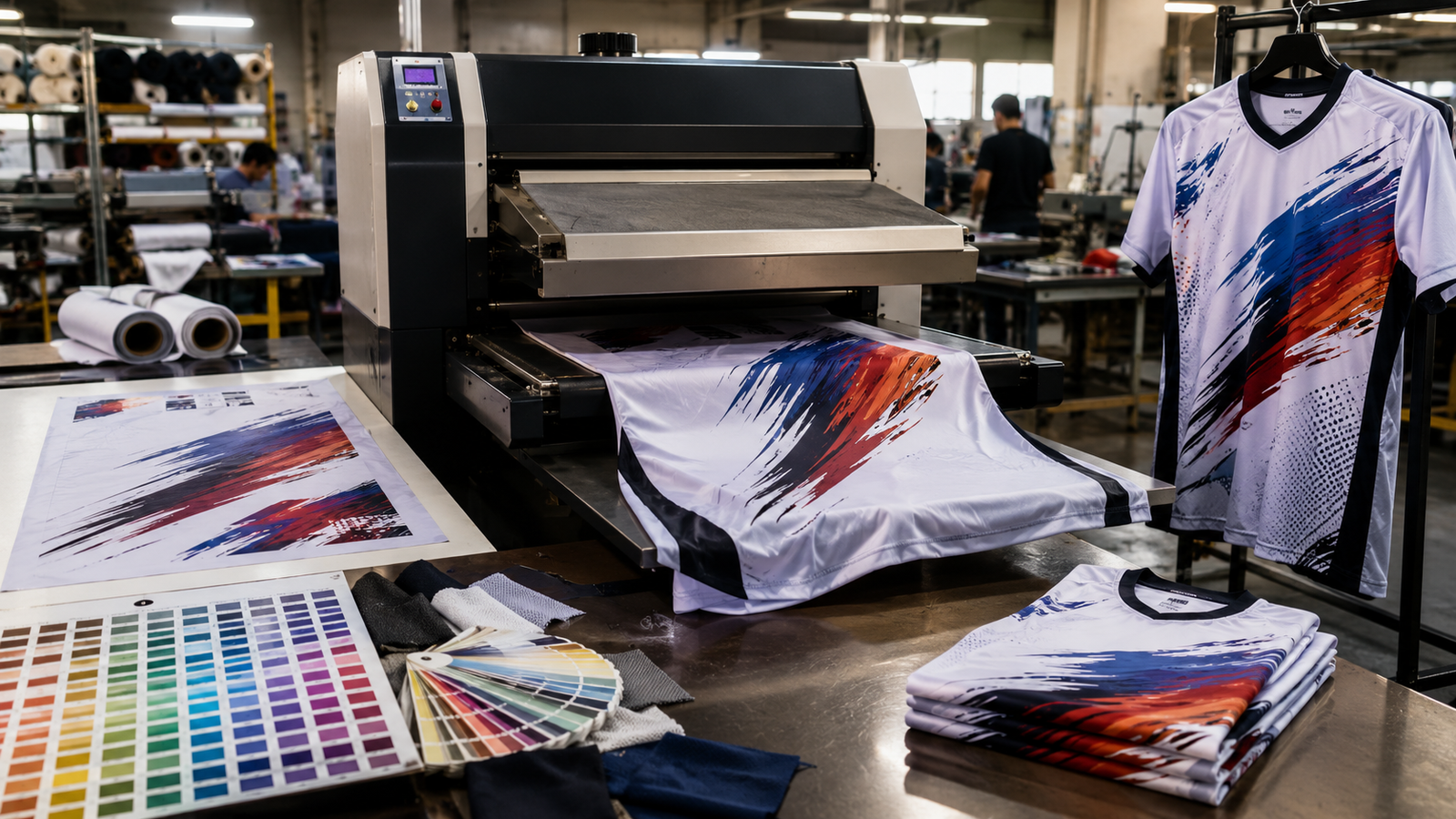
Everything you need to know about the printing method behind the most durable, vibrant custom sportswear on the market.
Introduction
If you've ever ordered a custom jersey, team kit, or branded gym wear and wondered why some designs fade after a few washes while others stay crisp season after season, the answer usually comes down to one thing: the printing method.
Sublimation printing is the industry standard for high-performance custom sportswear — and for good reason. In this guide, we'll break down exactly what it is, how it works, why it's different from other printing methods, and how to know if it's the right choice for your team, brand, or personal order.
What Is Sublimation Printing?
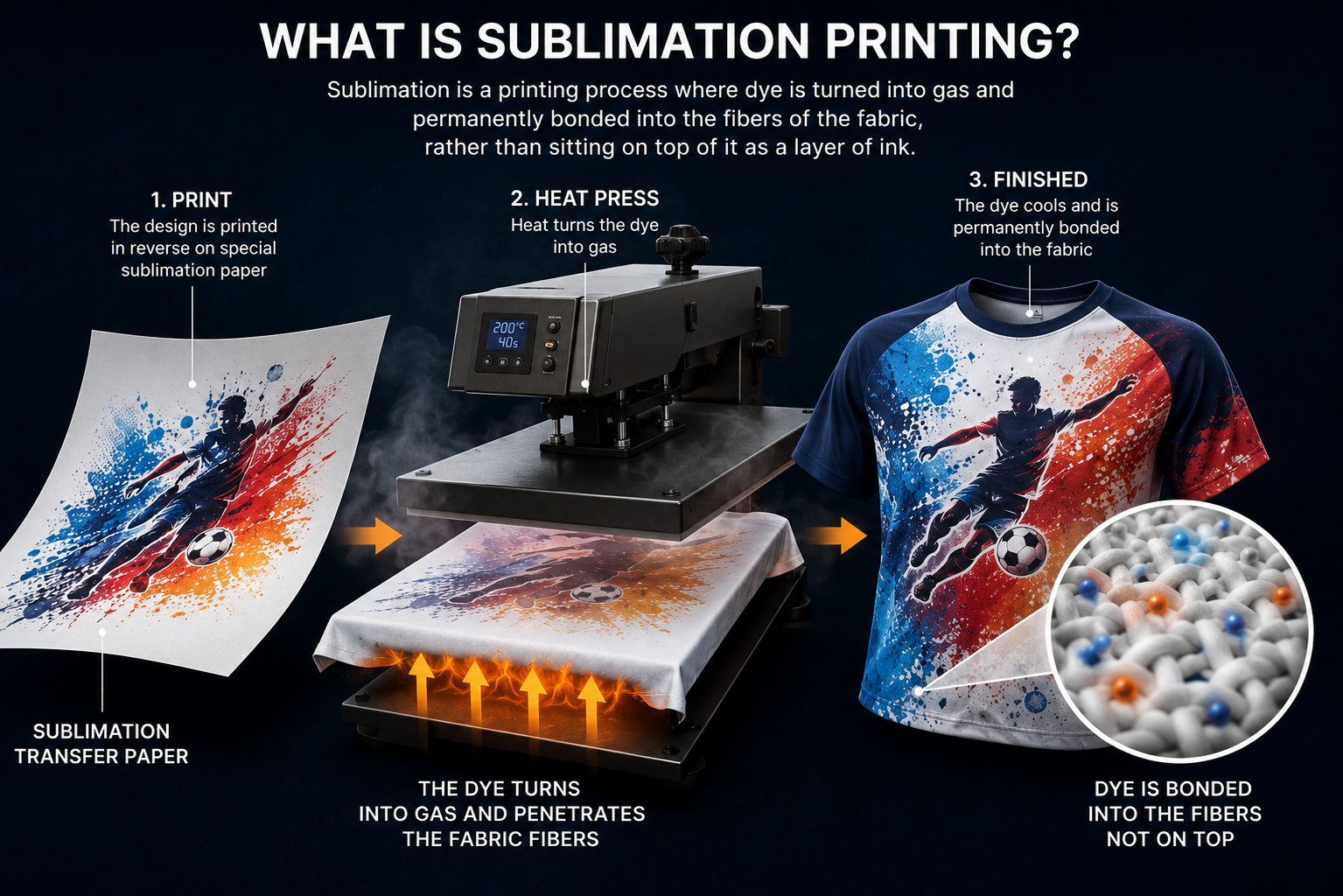
Sublimation is a printing process where dye is turned into gas and permanently bonded into the fibers of the fabric, rather than sitting on top of it as a layer of ink.
Here's the simple version of how it works:
- A design is printed onto special sublimation paper using dye-based ink
- The paper is placed onto the fabric (typically polyester or a poly-blend)
- Heat and pressure are applied, causing the dye to turn into gas
- The fabric fibers open up under heat and absorb the dye directly
- As the fabric cools, the fibers close, locking the color in permanently
The result is a design that becomes part of the fabric itself — not a layer printed or pressed onto the surface.
Why Sublimation Is the Preferred Method for Sportswear
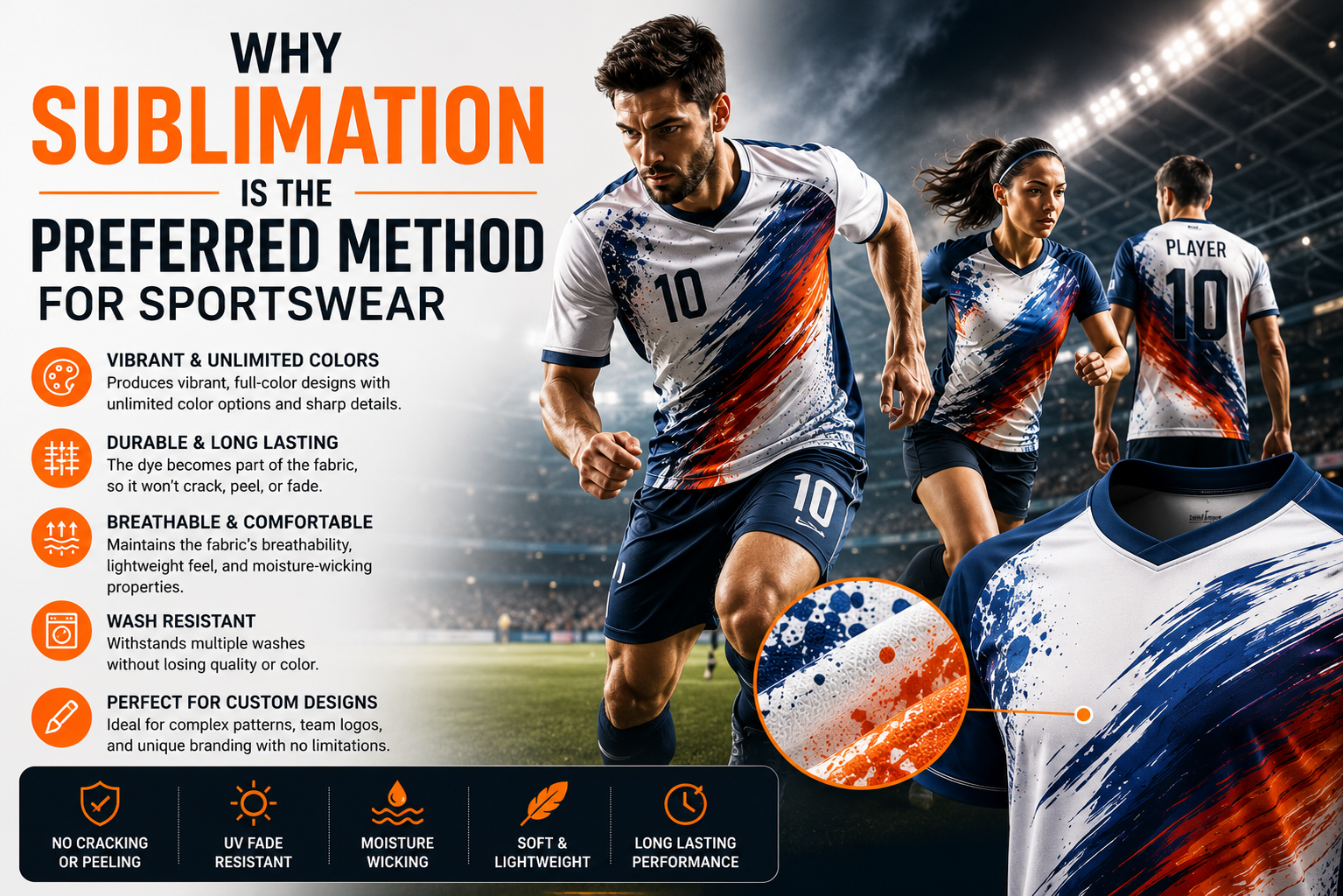
Sportswear goes through far more stress than everyday clothing — sweat, stretching, repeated washing, and constant movement. This makes the printing method matter a lot more than it does for a casual t-shirt.
1. It Never Cracks, Peels, or Fades
Since the dye is inside the fabric, there's no surface layer to crack or peel over time — a common problem with vinyl or screen-printed designs after repeated wear and washing.
2. Unlimited Colors and Detail
Unlike screen printing, which becomes more expensive with every additional color, sublimation supports full-color, photo-realistic designs at no extra cost — gradients, shading, and complex patterns are no problem.
3. Breathable, Lightweight Feel
Because there's no extra layer of ink or vinyl sitting on the fabric, the material stays just as breathable and lightweight as an unprinted garment — important for performance sportswear.
4. Full Garment Coverage
Sublimation allows all-over printing — full-front, full-back, sleeves, side panels — something that's difficult or expensive to achieve with screen printing or embroidery.
5. Perfect for Team & Brand Consistency
Since the design is digitally printed, every unit in a bulk order comes out identical — no variation in color or placement between pieces, which matters a lot for team uniforms.
Sublimation vs. Other Printing Methods
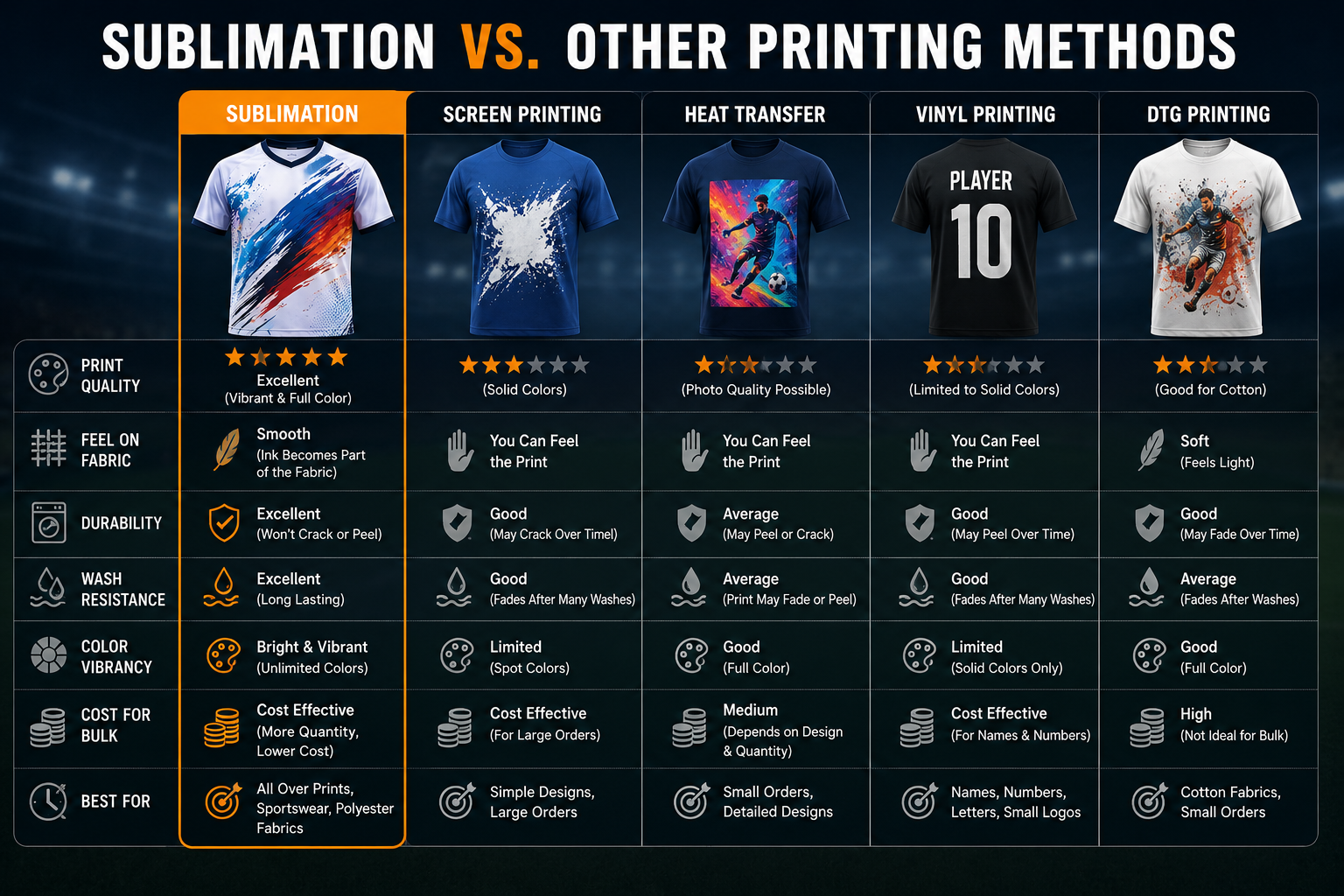
| Method | Best For | Durability | Color Limits | Feel on Fabric |
|---|---|---|---|---|
| Sublimation | Full-color sportswear, team kits, all-over designs | Excellent — dye becomes part of fabric | Unlimited colors | No added layer, stays breathable |
| Screen Printing | Simple logos, small color counts, cotton shirts | Good, but can crack/fade over time | Cost increases per color | Adds a slightly thicker layer |
| Embroidery | Logos, text, badges | Very durable, physical stitching | Limited by thread colors | Adds texture and slight weight |
| Heat Transfer/Vinyl | Small batch, simple designs | Prone to peeling and cracking | Limited | Adds a plastic-like layer |
Key takeaway: If your design involves multiple colors, gradients, or full-garment coverage — especially on performance fabric — sublimation is almost always the better choice.
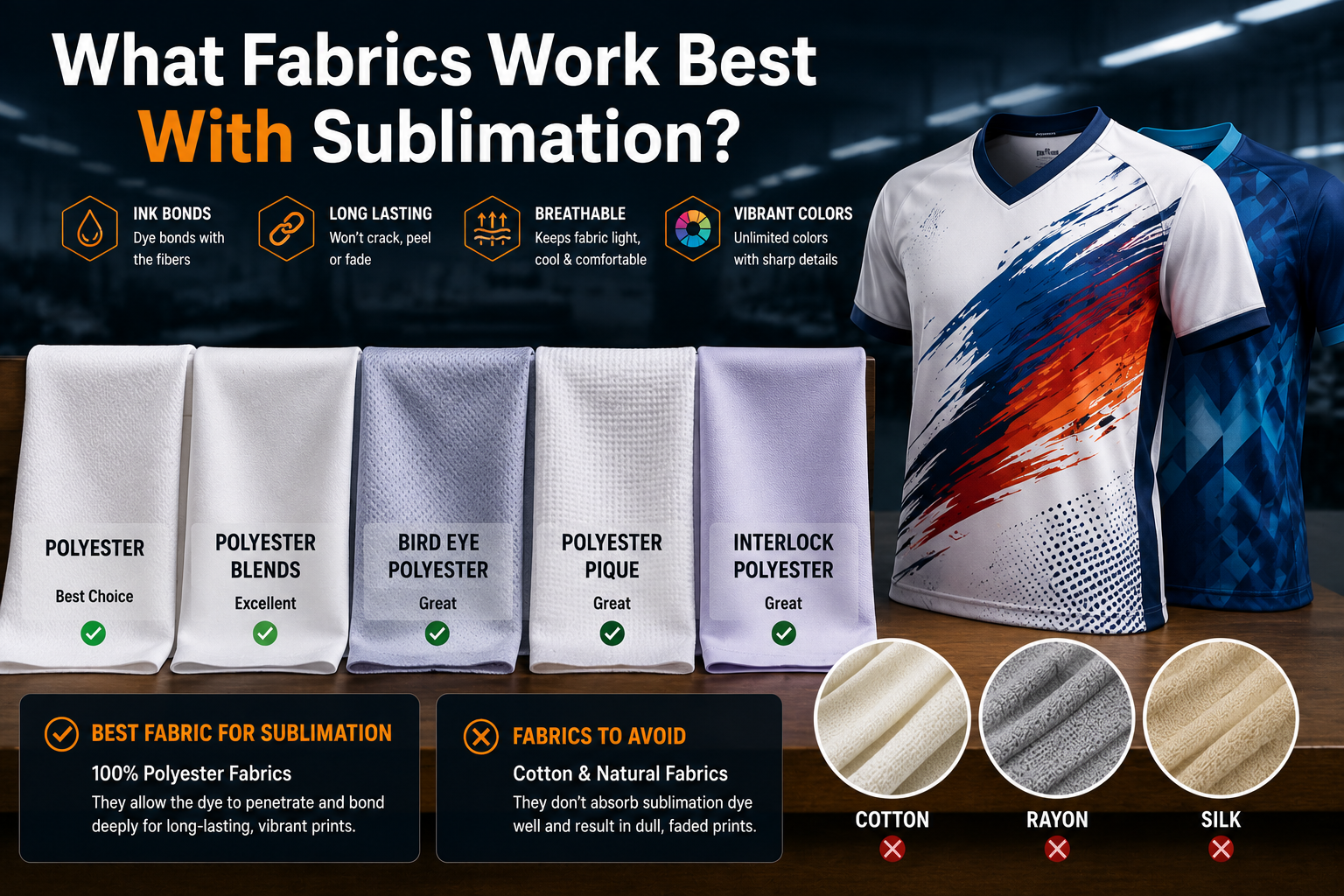
What Fabrics Work Best With Sublimation?
Sublimation works best on polyester and polyester-blend fabrics, since the dye needs synthetic fibers to bond with under heat. This actually works in sportswear's favor, since:
- Polyester is already the dominant fabric in performance sportswear
- It offers moisture-wicking and breathability — exactly what athletes need
- It holds shape and color well over repeated wash cycles
Note: Sublimation does not work well on 100% cotton, since cotton fibers can't properly absorb the sublimated dye — this is why sportswear manufacturers specifically design garments with high-polyester content for sublimated printing.
Is Sublimation Right for Your Order?
Sublimation is a strong fit if:
- You want full-color, detailed designs (photos, gradients, complex team graphics)
- You need long-lasting durability for regular match/training use
- You're ordering team uniforms and need consistent results across every unit
- You want all-over print coverage, not just a small logo
It may be less necessary if:
- You only need a single-color logo on a small area (embroidery may be more cost-effective)
- You're working with cotton-based casual wear rather than performance fabric
A good manufacturer will guide you toward the right method based on your specific design and fabric — rather than pushing one method for everything.
Common Questions About Sublimation Printing
Does sublimation printing fade over time? Properly done sublimation printing resists fading far better than surface-level printing methods, since the dye is embedded in the fabric rather than sitting on top of it.
Can sublimation be used for single, custom pieces — not just bulk orders? Yes. While sublimation is efficient for bulk team orders, it can absolutely be used for single custom pieces, making it a good option even for individual customers wanting a one-off design.
Is sublimation printing more expensive than screen printing? For simple, single-color designs, screen printing can sometimes be cheaper. But for multi-color or full-coverage designs, sublimation is usually more cost-effective since it doesn't charge per color.
Can any fabric be sublimated? No — sublimation requires polyester or a high-polyester blend. Cotton and natural fibers don't hold the dye properly.
Final Thoughts
The printing method behind your sportswear isn't just a technical detail — it directly affects how your jersey looks and performs after weeks of training, matches, and washing. Sublimation printing remains the go-to choice for teams, clubs, and brands that want vibrant, durable, full-color designs that hold up under real performance conditions.
Whether you're outfitting an entire team or customizing a single piece, understanding how sublimation works helps you make a more informed decision — and get a product that actually lasts.
Looking to get your team kit or custom sportswear sublimated? [Get in touch] to discuss your design, fabric, and order size — bulk or single-piece.
