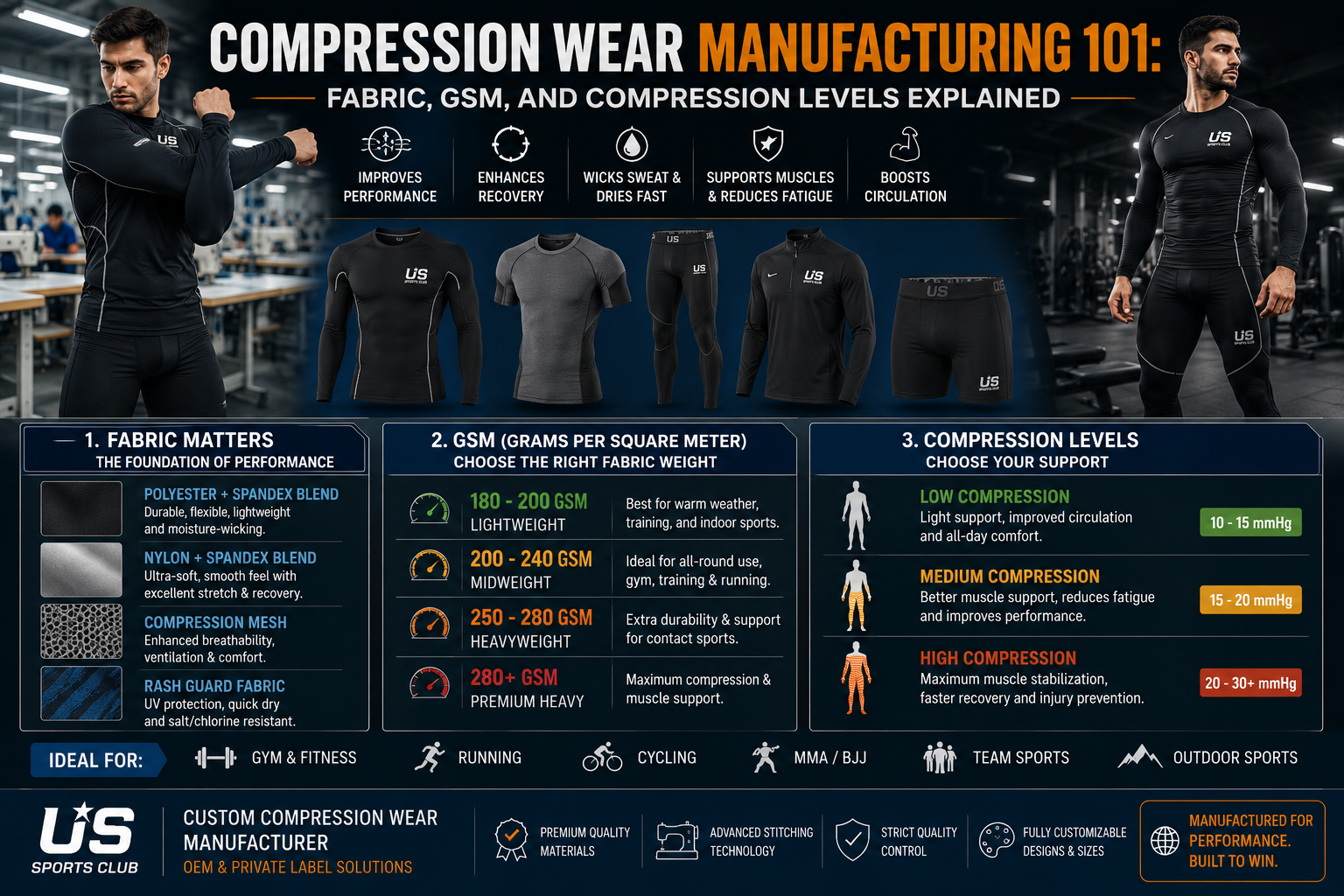
Compression apparel lives or dies on fabric blend, GSM, and compression grade. Here is what brands sourcing custom compression wear need to specify to get consistent results.
Compression wear looks simple from the outside — a tight-fitting athletic garment — but the manufacturing spec behind a good compression legging or top is more technical than almost any other category of sportswear. Get the fabric blend or compression grade wrong and the product either doesn't compress at all, or restricts circulation and movement in ways that hurt performance.
1. Fabric Blend: Polyester-Spandex vs. Nylon-Spandex
- Polyester-Spandex (typically 80/20 or 85/15): More affordable, excellent moisture-wicking, slightly less smooth hand-feel. The standard choice for mid-market compression lines.
- Nylon-Spandex (typically 78/22 or 80/20): Smoother, more matte finish, better recovery (returns to shape after stretching) and generally considered the premium option — used by most elite performance brands.
2. GSM Range for Compression Fabric
Compression fabric typically runs 180–280 GSM. Lower in that range (180–220 GSM) suits lightweight base layers for warm climates; higher (240–280 GSM) suits cold-weather layers and heavier support garments like knee sleeves or recovery tights.
3. Understanding Compression Levels
- Light compression: Everyday athletic wear, general muscle support, all-day comfort. Suitable for casual gym-goers.
- Medium compression: The standard for team sports, running, and general training — enough graduated support to reduce muscle vibration without restricting range of motion.
- High compression: Recovery wear, post-workout garments, and targeted medical-adjacent support products, engineered for graduated pressure over specific muscle groups.
Compression level is achieved through a combination of spandex percentage, knit density, and panel construction — not fabric weight alone, which is why "high GSM" and "high compression" are not the same spec and shouldn't be confused when placing an order.
4. Flatlock Stitching and Seam Placement
Nearly all quality compression garments use flatlock stitching — seams that lie flat against the skin rather than raised traditional seams — to prevent chafing during high-repetition movement. Seam placement also matters: seams positioned along natural muscle lines (rather than across them) improve both comfort and the garment's support function.
5. What to Specify When You Request a Quote
- Fabric blend and percentage (e.g. "88% polyester / 12% spandex")
- Target GSM range
- Compression level (light / medium / high) and intended use case
- Seam type (flatlock vs. standard) and panel construction preference
US SPORT CLUB manufactures private label and OEM compression wear at our Sialkot facility across all three compression levels, with physical fabric swatches sent before bulk production so you can confirm hand-feel and stretch recovery before committing to an order.
